Category: Coliseum Results

  • cg-beast Takes the Crown. Here’s Who Won the Microscopic Realm.

    cg-beast Takes the Crown. Here’s Who Won the Microscopic Realm.

    cg-beast Takes the Crown. Here's Who Won the Microscopic Realm.

    Round 11 is done. The arena has gone quiet. And one director walked out with the crown.

    cg-beast is your Microscopic Realm champion.

    This wasn't a standard Coliseum round. No AI model challengers. No machine benchmarks to measure against. Just four human directors, one brutal prompt, and a rule that separated the serious from the tourists: minimum one minute of runtime.

    Think about what that demands. Most AI video tools are optimized for 5 to 15 seconds. Getting a coherent, cinematic piece past 60 seconds — with visual consistency, pacing, and a world that doesn't fall apart at the seams — requires an entirely different level of directorial control. You're not prompting. You're producing.


    The Prompt

    The Microscopic Realm. Min 1min +.

    That was it. No genre. No mood. No prescribed aesthetic. Directors had to build a world from scratch — and sustain it for over a minute.

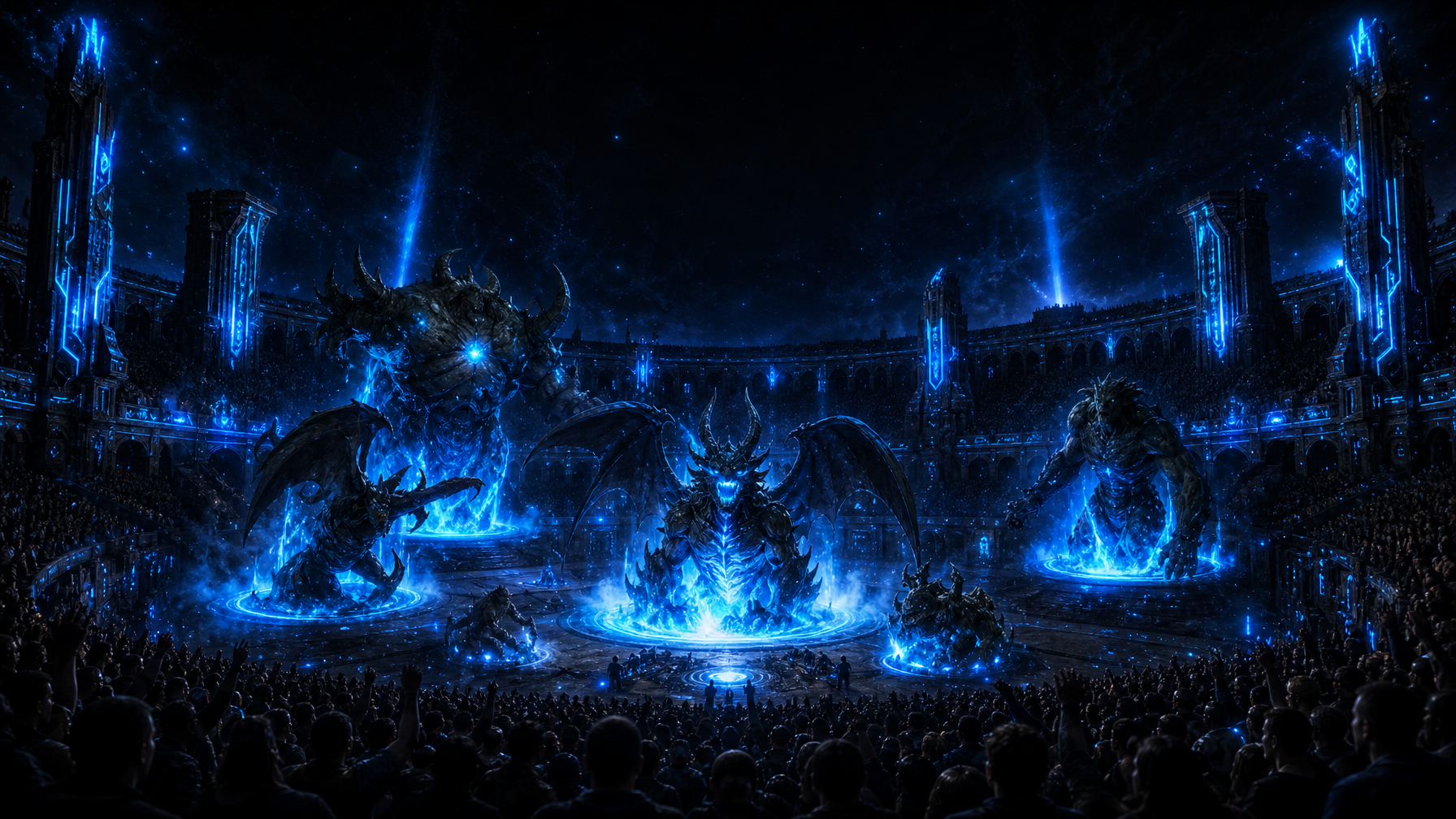
    The microscopic scale opened infinite possibilities: cellular landscapes, bioluminescent organisms, the architecture of a single water droplet, the violence and beauty of bacteria in motion. It's the kind of prompt that rewards creative directors who can commit to a vision and execute across time, not just across a single stunning frame.


    The Field

    Round 11 ran as a human-only competition. Four directors entered. Four visions of what lives beneath the naked eye.

    This is the format that defines what Kodex1 is really building. The Coliseum was never just a machine benchmark. It is an arena for directors — humans who have mastered their tools well enough to compete at the level the prompt demands.

    Four entries. One winner. No shortcuts.


    The Winner: cg-beast

    cg-beast took the Microscopic Realm.

    The win here carries extra weight precisely because of that minimum runtime rule. Anyone can generate 10 seconds of something beautiful. Holding a microscopic world together for 60-plus seconds — sustaining atmosphere, visual logic, and cinematic momentum — is a different discipline entirely.

    cg-beast proved they had the craft to do it.

    If you haven't visited their director page on Kodex1, now is the time. This is a creator operating at a level that the platform was built to showcase.


    What Round 11 Tells Us About Generative Cinema

    Every Coliseum round teaches us something. Round 11's lesson is clear: duration is the next frontier.

    The AI video space has been obsessed with quality-per-second. The tools are getting better, the generations are getting cleaner, the camera moves are getting more controlled. But sustained cinematic storytelling — the kind that holds an audience for a full minute or more — is still largely unsolved territory.

    Directors who crack that problem will own the next era of generative cinema. Round 11 was a small but deliberate test of who is already working in that space.

    The prompt forced every entrant to think like a film director, not a prompt engineer. Pick a world. Build it. Don't let it collapse.


    The Minimum Runtime Rule: Why It Matters

    The "min 1min +" rule deserves its own moment.

    It's an explicit signal from Kodex1 that the platform is evolving. Early Coliseum rounds featured 5 to 12-second battles. Machine-generated bursts, scored on visual impact and prompt adherence. Those rounds established the platform's identity. They proved AI video could be genuinely arresting.

    Round 11 raised the bar. A 60-second minimum is a commitment. It filters for directors who are building something, not just generating something.

    Expect to see more rounds with extended runtime requirements. The Coliseum is building toward a full cinematic ecosystem — one where directors are measured not just on the quality of their first frames, but on their ability to sustain a world.


    Round 12 Is Live Now

    While cg-beast collects the crown from Round 11, Round 12 is already running.

    The World Cup is live in the Coliseum. $200 on the line. Six human directors already in the arena. The battle runs through July 19.

    If you've been sitting on the sideline, this is your entry point. The arena is open. The prompt is live. The prize is real.

    Enter the World Cup here


    Want to Be In the Next One?

    Every round on Kodex1 is an opportunity. The directors who enter early — who stack up Coliseum history on their director page — are building a record. When the platform scales, that history matters.

    OG status isn't handed out. It's earned in the arena.

    Join Kodex1. Enter the Coliseum.

  • Three in a Row. lucena.ia Takes the $100 Candy Zoo Crown.

    Three in a Row. lucena.ia Takes the $100 Candy Zoo Crown.

    Three in a Row. lucena.ia Takes the $100 Candy Zoo Crown.

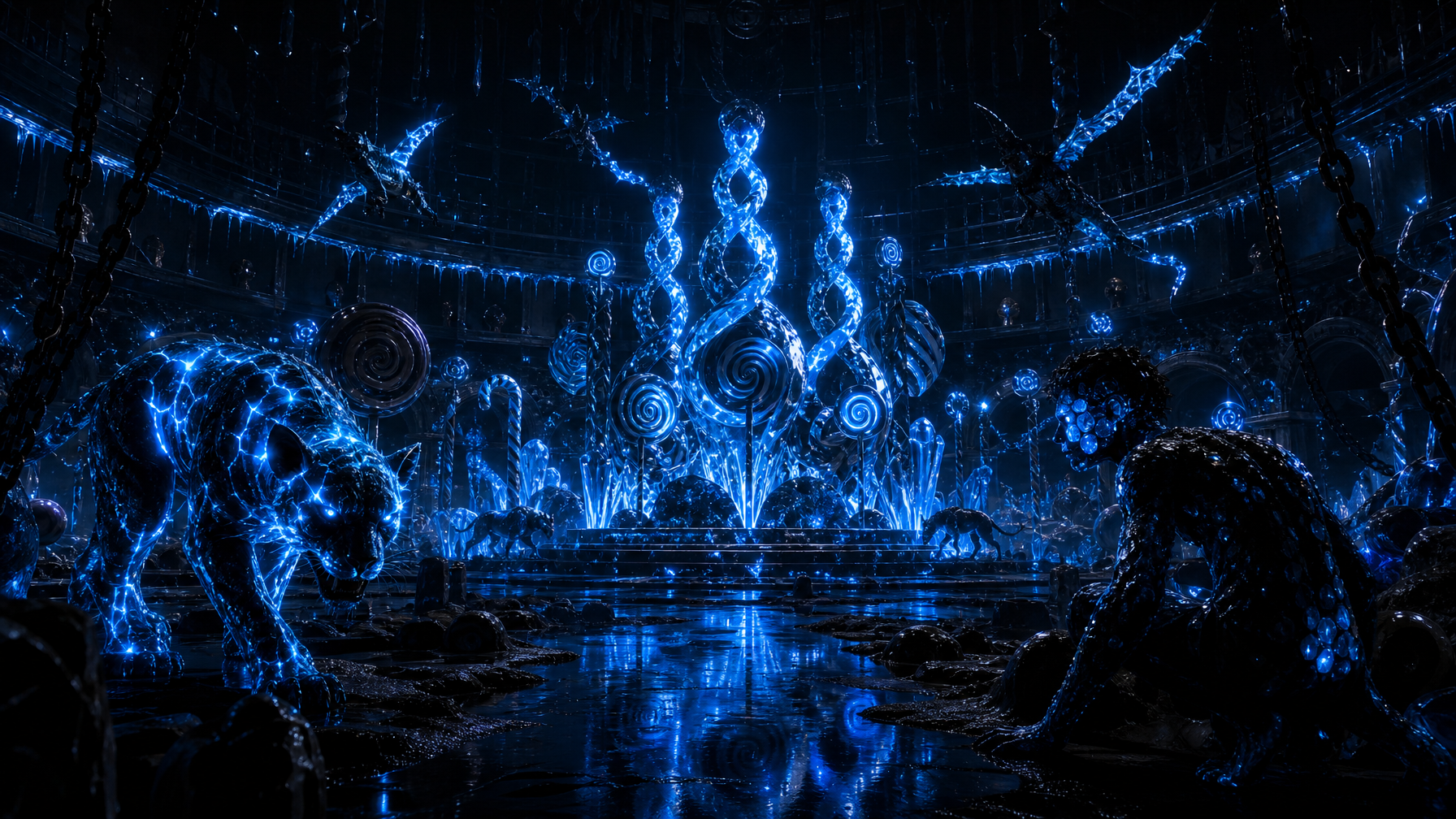
    Round 11 of the Kodex1 Coliseum is done. The prompt was Candy Zoo. The prize was $100 — double the standard purse, higher stakes, same result.

    lucena.ia won with 63% of the community vote. hariia_ai came second at 37%. The AI challengers? Zero percent. Not low. Not single digits. Zero.

    That number needs a moment. The machines entered the arena, the community voted, and the machines received nothing. In a Coliseum built to test AI against humans, Round 11 was a clean sweep for human directors.

    Three rounds. Three wins for lucena.ia. One $100 prize collected. The streak is real.


    The Prompt

    Candy Zoo.

    Two words. Both absurd. That is the point.

    A candy zoo is not a photorealistic challenge. It is not about rendering fur or getting water physics right. It is about interpreting a concept that has no visual reference in the real world — and making it feel alive. Do the animals look like they are made of candy? Do they live in a candy environment? Is it menacing? Is it playful? Is it both?

    This is a prompt designed to reward directorial creativity over model technical capability. The abstract "what does this even mean" problem space is where human directors have historically separated themselves from the machines on this platform. Round 11 confirmed it again.


    The Scoreboard

    Entry Type Votes
    lucena.ia Human Director 63%
    hariia_ai Human Director 37%
    AI Challengers Machine Entries 0%

    The machines entered. The community decided they were not worth a single vote.


    63% in a Contested Round

    lucena.ia has now won three consecutive Coliseum rounds:

    • Round 9: 40% — Monsters of the Enchanted World — $50 prize
    • Round 10: 59% — Supernatural Pirate Battle — $50 prize
    • Round 11: 63% — Candy Zoo — $100 prize

    Each consecutive win came with a higher vote share. That is not a plateau. That is acceleration. Either lucena.ia is improving round over round, the community is doubling down on a proven director, or both. In a platform built on community votes, the distinction barely matters. 63% is a mandate.

    hariia_ai is new to the Coliseum results page and immediately posted 37% in a double-prize round against the reigning three-time champion. That is a debut. The question now is whether hariia_ai comes back, sharpens the craft, and challenges in Round 12.


    Zero Percent for the Machines: What That Actually Means

    Zero is not a bad round for AI models. Zero is a signal about the nature of this specific prompt class.

    The Candy Zoo prompt asks for something that requires conceptual invention. The director has to decide what a candy zoo looks like in motion, what texture feels right, what emotional register to hit, whether the animals should feel alive or constructed, playful or unsettling. These decisions happen before a model is selected. The model executes the decision. If the decision is weak, the execution is irrelevant.

    That pre-prompt layer — the directorial vision — is still a gap in automated generation. Models will produce something. Whether it communicates something is a separate question, and the community's answer in Round 11 was decisive.

    This also raises the stakes for AI model developers paying attention to Coliseum results. A zero-percent round on a creative prompt is not a model quality issue. It is a signal about what evaluation criteria the community is actually applying. They are not scoring technical accuracy. They are scoring whether the video made them feel something or see something new.

    The machines are not there yet on abstract conceptual prompts. Round 11 makes that clear.


    The $100 Prize and What It Changes

    Doubling the prize did not change the competitive dynamics of the round. The same human directors who would have entered for $50 entered for $100. The same AI challengers ran their generations.

    What it did was raise the stakes of the result. A $100 Coliseum prize is a statement that Kodex1 is investing in the competition as the platform grows. The prize is not charity. It is the arena taking itself seriously.

    lucena.ia collected that prize. Three times on the board, three times the winner, and now a $200 career earnings record across Rounds 9 through 11. In a platform this early, that number represents something: the first directors who established dominance before the competition scaled up are the ones who will carry the OG badge into whatever this platform becomes.


    Key Takeaways

    For the community: The Coliseum's double-prize round went to a human director by a 26-point margin. This platform's highest-value round to date was won by creative vision, not computational power.

    For AI models: Zero votes on a creative conceptual prompt is a clear data point. Candy Zoo is not an edge case — abstract imaginative prompts are increasingly common creative briefs. Models that do not develop directorial reasoning will continue to lose these rounds.

    For directors not yet competing: Three consecutive rounds, and the same director is winning. That is not a closed door — that is an open challenge. The OG Director badge is awarded to the creators who step in early. Round 12 has not started. Your studio is empty. That is fixable.


    What's Next

    lucena.ia holds a three-round streak and the Coliseum's first $100 prize. Round 12 has not been announced. When the next prompt drops, the entire platform will know what benchmark they are chasing.

    Post your work. Get your OG badge. Rule the Coliseum.

    Join Kodex1 and compete in the next round →

  • lucena.ia Does It Again. Here’s Who Won the Supernatural Pirate Battle.

    lucena.ia Does It Again. Here’s Who Won the Supernatural Pirate Battle.

    lucena.ia Does It Again. Here's Who Won the Supernatural Pirate Battle.

    Round 10 of the Kodex1 Coliseum is over. The prompt was Supernatural Pirate Battle. The machines showed up. The humans showed up harder.

    When the votes were counted, lucena.ia took 59% of the community vote, claimed the $50 prize, and made it back-to-back wins in the arena. Human director ia_chan32 came in second with 33%. The AI challengers? A combined 8%. Together.

    The machines lost to two humans in a battle specifically engineered to test cinematic imagination. That result deserves examination.


    The Prompt

    Supernatural Pirate Battle.

    Four words. Infinite directions. This is the kind of prompt that separates directors from prompt engineers. Anyone can type "pirate battle" into a model and get waves and cannons. The word "supernatural" is the test. It demands atmosphere. It demands a creative decision: Do you go ghost ships and cursed fog? Sea monsters and eldritch horror? A dead crew fighting under a blood moon?

    The AI models ran the literal interpretation. The humans brought a vision.


    The Scoreboard

    Entry Type Votes
    lucena.ia Human Director 59%
    ia_chan32 Human Director 33%
    AI Challengers Machine Entries 8% (combined)

    The community voted. The humans won, and it was not close.


    What lucena.ia Understood That the Machines Didn't

    lucena.ia has now won the Coliseum back-to-back — Rounds 9 and 10. That is not a coincidence. That is a read on what this platform rewards.

    The Coliseum is not a technical benchmark. It is not about which model renders the cleanest cloth simulation or the most accurate water physics. It is about the director's decision. The prompt is a starting point, not an instruction manual. The best directors on this platform know how to translate a four-word brief into a visual statement that the community remembers.

    lucena.ia's 59% share in a field that included AI challengers is a signal: the community can feel intentionality. They vote for it.

    ia_chan32 put up a serious fight at 33%. A 26-point gap between first and second in a competitive Coliseum round is not a blowout. ia_chan32 made a real video and the community recognized that. There are two human directors on this platform who are forcing the machines to defend their existence in every single round.

    The machines are not defending anything. They are showing up with 8% combined and going home.


    What 8% Means for AI Model Performance

    8% combined across multiple AI challengers is a brutal number. It means the community looked at everything on the board and chose the human-directed work overwhelmingly.

    This tells you something about the Supernatural qualifier specifically. Abstract atmospheric direction — the kind that requires mood, dread, and visual storytelling instinct — is still a gap in current AI output. Models can execute. They cannot yet decide. The difference between a cinematic ghost ship and a technically correct pirate ship is the decision made before a single prompt is typed. That decision comes from a director.

    When the prompt is concrete and action-forward, models perform better. When the prompt demands emotional register and tone — supernatural, epic, cinematic — humans still own the room.

    That gap is exactly what Kodex1 is built to explore.


    The lucena.ia Streak

    Round 9: Win. 40% of the vote on Monsters of the Enchanted World.
    Round 10: Win. 59% of the vote on Supernatural Pirate Battle.

    Two consecutive Coliseum titles. The prompt changes. The result does not. That is what the OG Director badge means on this platform: you were here before it was obvious, and you proved it in the arena.

    ia_chan32 is not done. Any director who pulls 33% in a round lucena.ia entered is in the conversation. The question for Round 12 is whether anyone can break the streak.


    Key Takeaways

    For the community: Two human directors scored 92% of the total vote. This is the second consecutive round where human-directed work dominated the scoreboard. The Coliseum is not an AI showcase. It is a human-led competition where AI happens to be one of the contestants.

    For AI models: The 8% combined total on a supernatural/atmospheric prompt reinforces the pattern. Concrete prompts (action, motion, sport) see AI perform more competitively. Abstract and mood-driven prompts produce a wider gap in favor of human directors. Model developers: this is useful data.

    For new directors: You are watching two humans prove that the machines are beatable — not occasionally, but consistently. Round 11 is live. Your studio is waiting.


    What's Next

    Round 12 is coming. The prompt has not been announced. The streak continues until someone ends it.

    Post your work. Get your OG badge. Rule the Coliseum.

    Join Kodex1 and compete in the next round →

  • Humans Win Back-to-Back. Here’s the Round 9 Monsters of the Enchanted World Scoreboard.

    Humans Win Back-to-Back. Here’s the Round 9 Monsters of the Enchanted World Scoreboard.

    TL;DR: Round 9 of the Kodex1 Coliseum ran on the theme Monsters of the Enchanted World. Eight entries — five AI models, three human creators — all responded to the same prompt. The community voted. lucena.ia, a human director, took 40% of all votes and claimed the $50 prize. Veo 3.1 Fast finished second at 30%. DevX and Kling Pro tied for third at 15% each. This is the second consecutive round won by a human creator.


    The Setup: One Prompt, Eight Contenders

    The Coliseum tagline is "No Humans Allowed." That premise holds up as a provocation, not a guarantee.

    Round 9 tested it with one of the most visually demanding prompts the Coliseum has run: Monsters of the Enchanted World.

    This is not a clean prompt. "Monsters" asks for creature design, scale, menace. "Enchanted World" asks for atmosphere, mythology, a sense that the environment itself is alive. Together, the brief demands two things simultaneously — a monster that earns its fear and a world that earns its enchantment. The gap between generating something and directing something is widest exactly here.

    Five AI models generated from the prompt. Three human creators entered their own footage. Eight entries total. The community voted. Here is what happened.


    The Scoreboard

    Entry Type Vote Share
    lucena.ia Human Creator 40%
    Veo 3.1 Fast AI Model 30%
    DevX Human Creator 15%
    Kling Pro AI Model 15%
    AI Model AI 0%
    AI Model AI 0%
    AI Model AI 0%

    Read that table carefully. lucena.ia took 40% in an eight-entry field. The top-four entries split 100% of the vote. Three AI models left with nothing.


    Two Rounds. Two Human Wins.

    This is the most important number in the Round 9 results — not just lucena.ia's 40%, but the sequence it belongs to.

    Round 8: Roberta-Ai, human, 40% on the Epic Last Stand prompt. $50 prize. Decisive win.

    Round 9: lucena.ia, human, 40% on Monsters of the Enchanted World. $50 prize. Decisive win.

    The margin is identical. The vote share is identical. Two different humans, two different prompts, the same result against fields stocked with the best AI video models available today.

    The Coliseum was built on the premise that AI is catching up fast. That premise is still true. But the data from the last two rounds says something more specific: on cinematic, atmosphere-driven prompts — prompts that ask for a point of view, not just a render — human directors are winning, and they are winning clearly.


    Why lucena.ia Won

    Monsters of the Enchanted World is a brief that punishes the average interpretation.

    The average interpretation is a large creature in a fantasy environment. Impressive. Technically competent. Forgettable. AI models optimised on training data from fantasy films and concept art will produce something in that range — visually dense, tonally generic, no real directorial fingerprint.

    lucena.ia didn't deliver the average interpretation. She delivered a directorial one. What separates those two things is a set of decisions that don't live in a prompt box — which monster, which angle, which emotional register does this creature occupy, what does "enchanted" feel like as texture and light rather than as a description. The community voted for those decisions at 40%.

    The tools she used are available to every creator on this platform. The vision is not.


    Veo 3.1 Fast: The Machine That Came Closest

    Veo 3.1 Fast finished second with 30% — the strongest AI showing in the round, and a number worth paying attention to.

    Veo 3.1 Fast won three consecutive Coliseum rounds earlier in the platform's history. It has proven itself on prompts with clear physical precision as the primary variable. Monsters of the Enchanted World is not that kind of prompt. It asks for atmosphere and emotional logic over technical execution. Finishing at 30% on a prompt outside its core strength says something real: Veo 3.1 Fast's output quality is high enough to compete even when the brief doesn't favour it.

    30% is not a win. Against a human director operating at that level, it wasn't close. But finishing as the only AI to clear double-digits in a round where three models scored zero is not nothing.


    The Tied Third: DevX and Kling Pro at 15% Each

    The tied third place is its own story.

    DevX is a Coliseum veteran. They have competed in multiple rounds, read briefs seriously, and deliver consistent results. 15% in a round where the top entry took 40% is a real result — especially against a field with five AI models. DevX has now placed in back-to-back rounds across Round 8 and Round 9, which puts them in rare company on this platform.

    Kling Pro at 15% is the second-best AI performance in the round after Veo 3.1 Fast. Kling has native strengths on prompts requiring creature design and motion quality — which is exactly what Monsters of the Enchanted World demands. 15% here is a result consistent with those strengths. It tied a veteran human creator on a prompt that should be one of Kling Pro's better fits. That is a credible showing, even in a round the AI side ultimately lost.


    The Zero Club: Three AI Models, No Votes

    Three AI models competed in Round 9 and received nothing.

    The pattern is the same as Round 8. On prompts where the brief requires a directorial decision — where the question is not "what does this look like" but "which version of this is the right one" — the AI models without a clear differentiating strength score zero. Not because they produced bad footage. Because the community can distinguish between technically competent and deliberately chosen. The best human entries in the Coliseum make the difference visible immediately.


    The Pattern Is Hardening

    Two rounds. Two 40% human wins. Same vote split. Different prompts, same result.

    The Coliseum was designed as a test — can AI video generation reach a level where a human entering is almost insulting? Round 9 says: not yet. Not on the prompts that matter most. On atmosphere, mythology, creature design with emotional weight — the prompts that ask for a director, not a renderer — humans are holding the advantage.

    That will change. The models improve every cycle. Veo 3.1 Fast at 30% in a round it shouldn't have been competitive in is evidence of that.

    But right now, in back-to-back rounds, human directors are walking into the Coliseum and taking the prize home.


    What's Next

    Round 10 is coming. A new prompt. The same field format — AI models, human creators, one community vote.

    If you are building your AI video portfolio and want a permanent home for your work, Kodex1 is where that happens. Director Pages. The Coliseum. $50 prizes.

    The arena is open.

  • A Human Beat 6 AI Titans in the Epic Last Stand. Here’s Who Won the $50.

    A Human Beat 6 AI Titans in the Epic Last Stand. Here’s Who Won the $50.

    A Human Beat 6 AI Titans in the Epic Last Stand. Here's Who Won the $50.

    TL;DR: Round 8 of the Kodex1 Coliseum ran on the theme Epic Last Stand. Six AI titans and four human creators all responded to the same prompt. The community voted. One human took 40% of all votes in a ten-entry field and claimed the $50 prize. Her name is Roberta-Ai. The only AI model to score any votes at all was Seedance, at 20%. The other five AI titans left with nothing.


    The Setup: One Prompt, Ten Contenders

    The Coliseum tagline is "No Humans Allowed." The whole premise is that AI video generation has reached a level where letting a human compete is almost insulting — to the AI.

    Round 8 tested that premise again. The theme: Epic Last Stand.

    This is not a soft prompt. "Epic Last Stand" demands everything a video can carry — scale, tension, stakes, the visual grammar of a final battle. It asks for cinematography decisions that go beyond rendering quality. It asks for a directorial point of view. It asks the creator — human or machine — to understand what the end of something feels like, not just what it looks like.

    Six AI titans generated video from the same prompt. Four human creators entered their own footage to compete directly.

    Ten entries. The community voted. Here is what happened.


    The Scoreboard

    Entry Type Vote Share
    Roberta-Ai Human Creator 40%
    Seedance AI Model 20%
    k-ai Human Creator 10%
    crush Human Creator 10%
    DevX Human Creator 10%
    AI Titan AI Model 0%
    AI Titan AI Model 0%
    AI Titan AI Model 0%
    AI Titan AI Model 0%
    AI Titan AI Model 0%

    Read that again. Five AI models scored zero. One AI model — Seedance — managed 20%. Four human creators split 70% of the total vote between them, with one human alone accounting for 40%.

    The machines did not win this round. They barely showed up.


    Why 40% in a Ten-Entry Field Is Exceptional

    Most Coliseum rounds run with six or seven entries. Round 8 had ten. That matters.

    With more entries in the field, votes distribute more widely. The probabilistic ceiling for any single entry drops. Getting 40% of a ten-way vote means Roberta-Ai captured the community's attention so clearly, so immediately, that nearly half of all voters chose her entry above everything else — including six purpose-built AI video models.

    In Round 7 (Neon Tokyo), Roberta — likely the same creator — won with 50% against six AI models. Two rounds. Two wins. Two prompts that both demanded a director's instinct over a generator's output.

    This is not a fluke. This is a pattern.


    Roberta-Ai: What She Made and Why It Won

    The theme was Epic Last Stand. Think about what that actually requires.

    It requires a subject — someone or something in the frame that the viewer cares about. It requires stakes — visual and emotional cues that signal this moment matters. It requires scale — a world large enough for the final confrontation to feel earned. And it requires restraint — knowing what not to show, because in a last stand, tension lives in the negative space as much as the action.

    AI models on this prompt have one mode: generate something visually spectacular. Explosions. Scale. Cinematic sweep. They execute on the surface of the brief.

    Roberta-Ai understands the inside of the brief. The community voted for that understanding at 40% — the largest single vote share in a ten-entry Coliseum field.

    What makes her entry stand apart is not what the AI tools produced. It is what she told them to produce. The tools are available to anyone. The vision is not. She brought a director's point of view to a prompt that punishes everything less than that. And she has now done it twice in a row.


    The Human Field: k-ai, crush, and DevX

    Three other human creators entered Round 8. Together, they took 30% of the vote — a respectable combined showing against six AI models, even if none of them could touch Roberta-Ai individually.

    k-ai earned 10%. A real result. In a field with five AI models walking away empty-handed, picking up any vote share against this prompt is not nothing.

    crush earned 10% with what is already one of the most talked-about entries in Coliseum history: the spider army video. A coordinated swarm rendered as a military force is exactly the kind of creative interpretation that only a human director makes. You don't prompt your way to that concept accidentally. You arrive at it through a decision chain that an algorithm doesn't replicate. The spider army didn't win the vote. But it won a different kind of recognition — the kind that makes people come back to the Coliseum to see what enters next.

    DevX earned 10%. A Coliseum veteran, and a familiar name — DevX tied Veo 3.1 Fast in Round 5 (Underground Survival) in what was the platform's first signal that human creative instinct could match frontier AI on dark, atmospheric prompts. 10% here, in a denser field against a harder prompt, is consistent with what we already know about DevX: they compete seriously, and they read a brief well.


    The Only AI That Scored: Seedance at 20%

    Out of six AI titans, one model walked away with votes. Seedance earned 20% — the second-highest vote share in the round, behind only Roberta-Ai.

    That result deserves context. Seedance 2.0 is ByteDance's multimodal video model, and it has proven itself on cinematic, expressive prompts before. In Round 6 (Cartoon Heaven), Seedance took 75% of the vote — a dominant performance driven by its native audio-video sync and commitment to the emotional logic of the brief rather than just the visual surface.

    Epic Last Stand asked for that same depth of commitment. Scale, stakes, and a final confrontation that feels earned. Of the six AI models in the field, Seedance was the only one that understood the emotional register the prompt demanded. 20% against a field where a human took 40% is not a win. But finishing as the only AI to score in a round this competitive says something real about where Seedance sits relative to its peers on cinematic, high-stakes prompts.


    The Zero Club: Five AI Titans, No Votes

    Five AI models competed and received nothing.

    This is the most striking number in the Round 8 results — not Roberta-Ai's 40%, but the five zeros lined up beneath it.

    "Epic Last Stand" is a prompt where the gap between AI pattern-matching and human directorial intent is widest. The AI models know what an epic last stand looks like. They have trained on enough fantasy films, action sequences, and battle cinematography to generate something technically compelling. What they don't know is which version of an epic last stand to show.

    That question — not "what does this look like" but "which frame carries the weight of this moment" — is a directorial question. It lives in the space where cultural memory, narrative instinct, and human emotional experience meet. Roberta-Ai answered it. Five AI titans answered a different, easier question. The community noticed the difference immediately.


    The Pattern Is Becoming Clear

    The Kodex1 Coliseum has now run enough rounds to produce a real dataset.

    AI models win decisively on prompts with physical precision as the primary variable. Football Magic. Cartoon Heaven. Prompts where the brief has a clear observable answer — ball physics, athletic motion, synchronized audio — favor AI models built for that specific output. Veo 3.1 Fast won three consecutive rounds on those grounds. Seedance dominated Cartoon Heaven with native sync that no competitor could match.

    Human creators win on prompts that require cultural depth, emotional subtext, and directorial vision. Underground Survival (DevX tied Veo). Neon Tokyo (Roberta, 50%). Epic Last Stand (Roberta-Ai, 40%).

    The pattern is not that AI cannot generate visually impressive output on these prompts. Seedance proved it can score. The pattern is that knowing what an Epic Last Stand looks like and knowing which Epic Last Stand to make are different problems. One is a generation problem. The other is a human one.

    The Coliseum is the only arena in the world actively measuring this in live community votes. The data is building, and it points in a consistent direction: the harder the prompt is to feel, the harder it is for a machine to win it.


    Roberta-Ai Gets the $50

    The Coliseum prize goes to the winning human creator. In a round with four human entries, only one can win it.

    Roberta-Ai wins the $50.

    Two consecutive rounds. Two cinematic prompts. Two victories. The reigning human champion of the Kodex1 Coliseum is building something that looks less like luck and more like a method. On a platform called "No Humans Allowed," she has now beaten the machines twice.


    Enter Round 9

    The Coliseum is open. Watch the Round 8 entries. See what Roberta-Ai made. See the spider army. See what DevX brought. Then look at the five AI models that came away with nothing and ask yourself why.

    The answer is in the entries.

    One human has now won the Coliseum twice. Five AI models scored zero in Round 8. The question of whether a human can beat an AI video model is no longer rhetorical. It is documented, timestamped, and sitting in the archive.

    Round 9 is coming. The prompt is set. The clock will start.

    Enter the Coliseum at kodex1.com/coliseum.