Tag: AI video

  • lucena.ia Does It Again. Here’s Who Won the Supernatural Pirate Battle.

    lucena.ia Does It Again. Here’s Who Won the Supernatural Pirate Battle.

    lucena.ia Does It Again. Here's Who Won the Supernatural Pirate Battle.

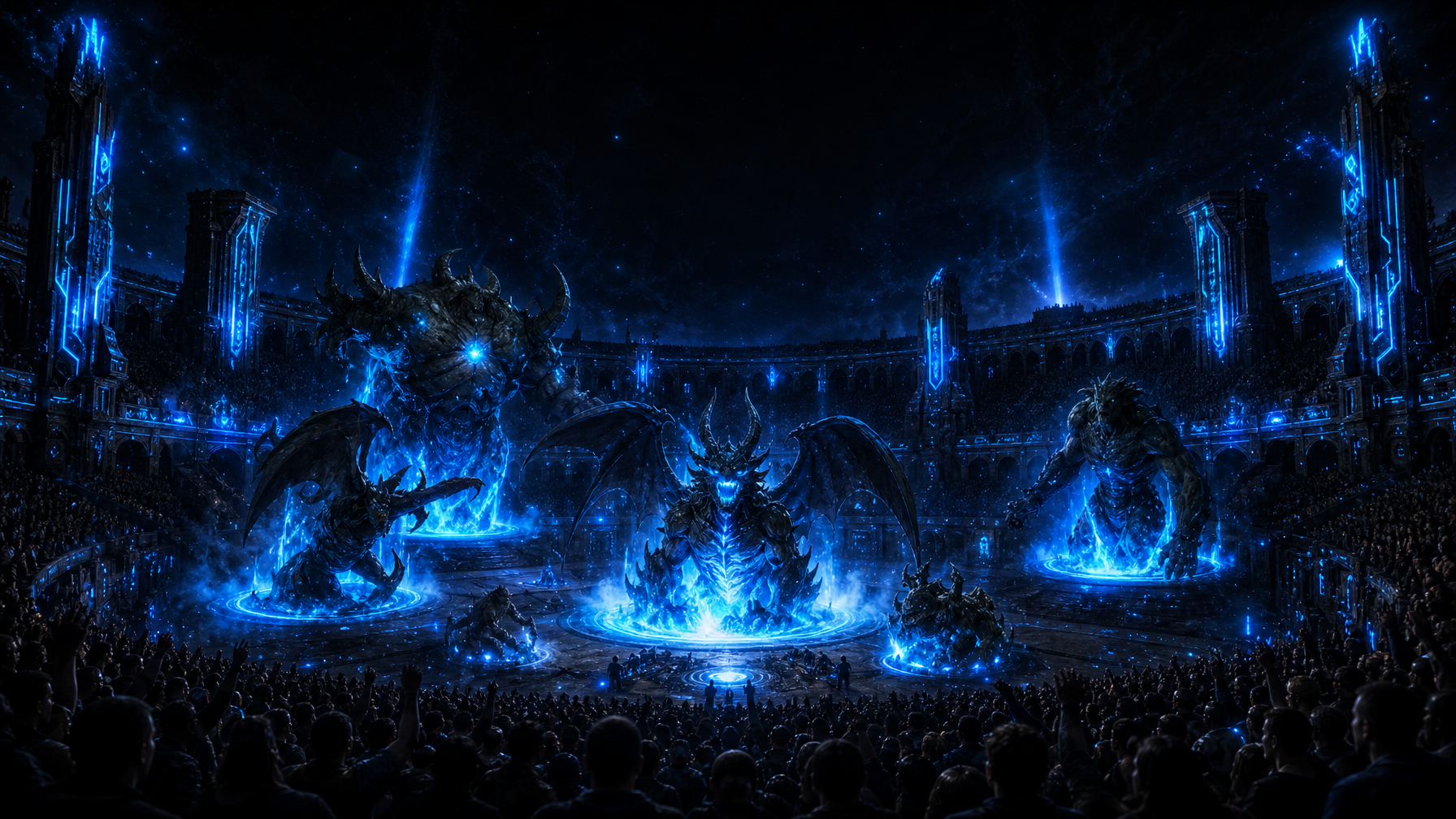
    Round 10 of the Kodex1 Coliseum is over. The prompt was Supernatural Pirate Battle. The machines showed up. The humans showed up harder.

    When the votes were counted, lucena.ia took 59% of the community vote, claimed the $50 prize, and made it back-to-back wins in the arena. Human director ia_chan32 came in second with 33%. The AI challengers? A combined 8%. Together.

    The machines lost to two humans in a battle specifically engineered to test cinematic imagination. That result deserves examination.


    The Prompt

    Supernatural Pirate Battle.

    Four words. Infinite directions. This is the kind of prompt that separates directors from prompt engineers. Anyone can type "pirate battle" into a model and get waves and cannons. The word "supernatural" is the test. It demands atmosphere. It demands a creative decision: Do you go ghost ships and cursed fog? Sea monsters and eldritch horror? A dead crew fighting under a blood moon?

    The AI models ran the literal interpretation. The humans brought a vision.


    The Scoreboard

    Entry Type Votes
    lucena.ia Human Director 59%
    ia_chan32 Human Director 33%
    AI Challengers Machine Entries 8% (combined)

    The community voted. The humans won, and it was not close.


    What lucena.ia Understood That the Machines Didn't

    lucena.ia has now won the Coliseum back-to-back — Rounds 9 and 10. That is not a coincidence. That is a read on what this platform rewards.

    The Coliseum is not a technical benchmark. It is not about which model renders the cleanest cloth simulation or the most accurate water physics. It is about the director's decision. The prompt is a starting point, not an instruction manual. The best directors on this platform know how to translate a four-word brief into a visual statement that the community remembers.

    lucena.ia's 59% share in a field that included AI challengers is a signal: the community can feel intentionality. They vote for it.

    ia_chan32 put up a serious fight at 33%. A 26-point gap between first and second in a competitive Coliseum round is not a blowout. ia_chan32 made a real video and the community recognized that. There are two human directors on this platform who are forcing the machines to defend their existence in every single round.

    The machines are not defending anything. They are showing up with 8% combined and going home.


    What 8% Means for AI Model Performance

    8% combined across multiple AI challengers is a brutal number. It means the community looked at everything on the board and chose the human-directed work overwhelmingly.

    This tells you something about the Supernatural qualifier specifically. Abstract atmospheric direction — the kind that requires mood, dread, and visual storytelling instinct — is still a gap in current AI output. Models can execute. They cannot yet decide. The difference between a cinematic ghost ship and a technically correct pirate ship is the decision made before a single prompt is typed. That decision comes from a director.

    When the prompt is concrete and action-forward, models perform better. When the prompt demands emotional register and tone — supernatural, epic, cinematic — humans still own the room.

    That gap is exactly what Kodex1 is built to explore.


    The lucena.ia Streak

    Round 9: Win. 40% of the vote on Monsters of the Enchanted World.
    Round 10: Win. 59% of the vote on Supernatural Pirate Battle.

    Two consecutive Coliseum titles. The prompt changes. The result does not. That is what the OG Director badge means on this platform: you were here before it was obvious, and you proved it in the arena.

    ia_chan32 is not done. Any director who pulls 33% in a round lucena.ia entered is in the conversation. The question for Round 12 is whether anyone can break the streak.


    Key Takeaways

    For the community: Two human directors scored 92% of the total vote. This is the second consecutive round where human-directed work dominated the scoreboard. The Coliseum is not an AI showcase. It is a human-led competition where AI happens to be one of the contestants.

    For AI models: The 8% combined total on a supernatural/atmospheric prompt reinforces the pattern. Concrete prompts (action, motion, sport) see AI perform more competitively. Abstract and mood-driven prompts produce a wider gap in favor of human directors. Model developers: this is useful data.

    For new directors: You are watching two humans prove that the machines are beatable — not occasionally, but consistently. Round 11 is live. Your studio is waiting.


    What's Next

    Round 12 is coming. The prompt has not been announced. The streak continues until someone ends it.

    Post your work. Get your OG badge. Rule the Coliseum.

    Join Kodex1 and compete in the next round →

  • Humans Win Back-to-Back. Here’s the Round 9 Monsters of the Enchanted World Scoreboard.

    Humans Win Back-to-Back. Here’s the Round 9 Monsters of the Enchanted World Scoreboard.

    TL;DR: Round 9 of the Kodex1 Coliseum ran on the theme Monsters of the Enchanted World. Eight entries — five AI models, three human creators — all responded to the same prompt. The community voted. lucena.ia, a human director, took 40% of all votes and claimed the $50 prize. Veo 3.1 Fast finished second at 30%. DevX and Kling Pro tied for third at 15% each. This is the second consecutive round won by a human creator.


    The Setup: One Prompt, Eight Contenders

    The Coliseum tagline is "No Humans Allowed." That premise holds up as a provocation, not a guarantee.

    Round 9 tested it with one of the most visually demanding prompts the Coliseum has run: Monsters of the Enchanted World.

    This is not a clean prompt. "Monsters" asks for creature design, scale, menace. "Enchanted World" asks for atmosphere, mythology, a sense that the environment itself is alive. Together, the brief demands two things simultaneously — a monster that earns its fear and a world that earns its enchantment. The gap between generating something and directing something is widest exactly here.

    Five AI models generated from the prompt. Three human creators entered their own footage. Eight entries total. The community voted. Here is what happened.


    The Scoreboard

    Entry Type Vote Share
    lucena.ia Human Creator 40%
    Veo 3.1 Fast AI Model 30%
    DevX Human Creator 15%
    Kling Pro AI Model 15%
    AI Model AI 0%
    AI Model AI 0%
    AI Model AI 0%

    Read that table carefully. lucena.ia took 40% in an eight-entry field. The top-four entries split 100% of the vote. Three AI models left with nothing.


    Two Rounds. Two Human Wins.

    This is the most important number in the Round 9 results — not just lucena.ia's 40%, but the sequence it belongs to.

    Round 8: Roberta-Ai, human, 40% on the Epic Last Stand prompt. $50 prize. Decisive win.

    Round 9: lucena.ia, human, 40% on Monsters of the Enchanted World. $50 prize. Decisive win.

    The margin is identical. The vote share is identical. Two different humans, two different prompts, the same result against fields stocked with the best AI video models available today.

    The Coliseum was built on the premise that AI is catching up fast. That premise is still true. But the data from the last two rounds says something more specific: on cinematic, atmosphere-driven prompts — prompts that ask for a point of view, not just a render — human directors are winning, and they are winning clearly.


    Why lucena.ia Won

    Monsters of the Enchanted World is a brief that punishes the average interpretation.

    The average interpretation is a large creature in a fantasy environment. Impressive. Technically competent. Forgettable. AI models optimised on training data from fantasy films and concept art will produce something in that range — visually dense, tonally generic, no real directorial fingerprint.

    lucena.ia didn't deliver the average interpretation. She delivered a directorial one. What separates those two things is a set of decisions that don't live in a prompt box — which monster, which angle, which emotional register does this creature occupy, what does "enchanted" feel like as texture and light rather than as a description. The community voted for those decisions at 40%.

    The tools she used are available to every creator on this platform. The vision is not.


    Veo 3.1 Fast: The Machine That Came Closest

    Veo 3.1 Fast finished second with 30% — the strongest AI showing in the round, and a number worth paying attention to.

    Veo 3.1 Fast won three consecutive Coliseum rounds earlier in the platform's history. It has proven itself on prompts with clear physical precision as the primary variable. Monsters of the Enchanted World is not that kind of prompt. It asks for atmosphere and emotional logic over technical execution. Finishing at 30% on a prompt outside its core strength says something real: Veo 3.1 Fast's output quality is high enough to compete even when the brief doesn't favour it.

    30% is not a win. Against a human director operating at that level, it wasn't close. But finishing as the only AI to clear double-digits in a round where three models scored zero is not nothing.


    The Tied Third: DevX and Kling Pro at 15% Each

    The tied third place is its own story.

    DevX is a Coliseum veteran. They have competed in multiple rounds, read briefs seriously, and deliver consistent results. 15% in a round where the top entry took 40% is a real result — especially against a field with five AI models. DevX has now placed in back-to-back rounds across Round 8 and Round 9, which puts them in rare company on this platform.

    Kling Pro at 15% is the second-best AI performance in the round after Veo 3.1 Fast. Kling has native strengths on prompts requiring creature design and motion quality — which is exactly what Monsters of the Enchanted World demands. 15% here is a result consistent with those strengths. It tied a veteran human creator on a prompt that should be one of Kling Pro's better fits. That is a credible showing, even in a round the AI side ultimately lost.


    The Zero Club: Three AI Models, No Votes

    Three AI models competed in Round 9 and received nothing.

    The pattern is the same as Round 8. On prompts where the brief requires a directorial decision — where the question is not "what does this look like" but "which version of this is the right one" — the AI models without a clear differentiating strength score zero. Not because they produced bad footage. Because the community can distinguish between technically competent and deliberately chosen. The best human entries in the Coliseum make the difference visible immediately.


    The Pattern Is Hardening

    Two rounds. Two 40% human wins. Same vote split. Different prompts, same result.

    The Coliseum was designed as a test — can AI video generation reach a level where a human entering is almost insulting? Round 9 says: not yet. Not on the prompts that matter most. On atmosphere, mythology, creature design with emotional weight — the prompts that ask for a director, not a renderer — humans are holding the advantage.

    That will change. The models improve every cycle. Veo 3.1 Fast at 30% in a round it shouldn't have been competitive in is evidence of that.

    But right now, in back-to-back rounds, human directors are walking into the Coliseum and taking the prize home.


    What's Next

    Round 10 is coming. A new prompt. The same field format — AI models, human creators, one community vote.

    If you are building your AI video portfolio and want a permanent home for your work, Kodex1 is where that happens. Director Pages. The Coliseum. $50 prizes.

    The arena is open.

  • A Human Beat 6 AI Titans in the Epic Last Stand. Here’s Who Won the $50.

    A Human Beat 6 AI Titans in the Epic Last Stand. Here’s Who Won the $50.

    A Human Beat 6 AI Titans in the Epic Last Stand. Here's Who Won the $50.

    TL;DR: Round 8 of the Kodex1 Coliseum ran on the theme Epic Last Stand. Six AI titans and four human creators all responded to the same prompt. The community voted. One human took 40% of all votes in a ten-entry field and claimed the $50 prize. Her name is Roberta-Ai. The only AI model to score any votes at all was Seedance, at 20%. The other five AI titans left with nothing.


    The Setup: One Prompt, Ten Contenders

    The Coliseum tagline is "No Humans Allowed." The whole premise is that AI video generation has reached a level where letting a human compete is almost insulting — to the AI.

    Round 8 tested that premise again. The theme: Epic Last Stand.

    This is not a soft prompt. "Epic Last Stand" demands everything a video can carry — scale, tension, stakes, the visual grammar of a final battle. It asks for cinematography decisions that go beyond rendering quality. It asks for a directorial point of view. It asks the creator — human or machine — to understand what the end of something feels like, not just what it looks like.

    Six AI titans generated video from the same prompt. Four human creators entered their own footage to compete directly.

    Ten entries. The community voted. Here is what happened.


    The Scoreboard

    Entry Type Vote Share
    Roberta-Ai Human Creator 40%
    Seedance AI Model 20%
    k-ai Human Creator 10%
    crush Human Creator 10%
    DevX Human Creator 10%
    AI Titan AI Model 0%
    AI Titan AI Model 0%
    AI Titan AI Model 0%
    AI Titan AI Model 0%
    AI Titan AI Model 0%

    Read that again. Five AI models scored zero. One AI model — Seedance — managed 20%. Four human creators split 70% of the total vote between them, with one human alone accounting for 40%.

    The machines did not win this round. They barely showed up.


    Why 40% in a Ten-Entry Field Is Exceptional

    Most Coliseum rounds run with six or seven entries. Round 8 had ten. That matters.

    With more entries in the field, votes distribute more widely. The probabilistic ceiling for any single entry drops. Getting 40% of a ten-way vote means Roberta-Ai captured the community's attention so clearly, so immediately, that nearly half of all voters chose her entry above everything else — including six purpose-built AI video models.

    In Round 7 (Neon Tokyo), Roberta — likely the same creator — won with 50% against six AI models. Two rounds. Two wins. Two prompts that both demanded a director's instinct over a generator's output.

    This is not a fluke. This is a pattern.


    Roberta-Ai: What She Made and Why It Won

    The theme was Epic Last Stand. Think about what that actually requires.

    It requires a subject — someone or something in the frame that the viewer cares about. It requires stakes — visual and emotional cues that signal this moment matters. It requires scale — a world large enough for the final confrontation to feel earned. And it requires restraint — knowing what not to show, because in a last stand, tension lives in the negative space as much as the action.

    AI models on this prompt have one mode: generate something visually spectacular. Explosions. Scale. Cinematic sweep. They execute on the surface of the brief.

    Roberta-Ai understands the inside of the brief. The community voted for that understanding at 40% — the largest single vote share in a ten-entry Coliseum field.

    What makes her entry stand apart is not what the AI tools produced. It is what she told them to produce. The tools are available to anyone. The vision is not. She brought a director's point of view to a prompt that punishes everything less than that. And she has now done it twice in a row.


    The Human Field: k-ai, crush, and DevX

    Three other human creators entered Round 8. Together, they took 30% of the vote — a respectable combined showing against six AI models, even if none of them could touch Roberta-Ai individually.

    k-ai earned 10%. A real result. In a field with five AI models walking away empty-handed, picking up any vote share against this prompt is not nothing.

    crush earned 10% with what is already one of the most talked-about entries in Coliseum history: the spider army video. A coordinated swarm rendered as a military force is exactly the kind of creative interpretation that only a human director makes. You don't prompt your way to that concept accidentally. You arrive at it through a decision chain that an algorithm doesn't replicate. The spider army didn't win the vote. But it won a different kind of recognition — the kind that makes people come back to the Coliseum to see what enters next.

    DevX earned 10%. A Coliseum veteran, and a familiar name — DevX tied Veo 3.1 Fast in Round 5 (Underground Survival) in what was the platform's first signal that human creative instinct could match frontier AI on dark, atmospheric prompts. 10% here, in a denser field against a harder prompt, is consistent with what we already know about DevX: they compete seriously, and they read a brief well.


    The Only AI That Scored: Seedance at 20%

    Out of six AI titans, one model walked away with votes. Seedance earned 20% — the second-highest vote share in the round, behind only Roberta-Ai.

    That result deserves context. Seedance 2.0 is ByteDance's multimodal video model, and it has proven itself on cinematic, expressive prompts before. In Round 6 (Cartoon Heaven), Seedance took 75% of the vote — a dominant performance driven by its native audio-video sync and commitment to the emotional logic of the brief rather than just the visual surface.

    Epic Last Stand asked for that same depth of commitment. Scale, stakes, and a final confrontation that feels earned. Of the six AI models in the field, Seedance was the only one that understood the emotional register the prompt demanded. 20% against a field where a human took 40% is not a win. But finishing as the only AI to score in a round this competitive says something real about where Seedance sits relative to its peers on cinematic, high-stakes prompts.


    The Zero Club: Five AI Titans, No Votes

    Five AI models competed and received nothing.

    This is the most striking number in the Round 8 results — not Roberta-Ai's 40%, but the five zeros lined up beneath it.

    "Epic Last Stand" is a prompt where the gap between AI pattern-matching and human directorial intent is widest. The AI models know what an epic last stand looks like. They have trained on enough fantasy films, action sequences, and battle cinematography to generate something technically compelling. What they don't know is which version of an epic last stand to show.

    That question — not "what does this look like" but "which frame carries the weight of this moment" — is a directorial question. It lives in the space where cultural memory, narrative instinct, and human emotional experience meet. Roberta-Ai answered it. Five AI titans answered a different, easier question. The community noticed the difference immediately.


    The Pattern Is Becoming Clear

    The Kodex1 Coliseum has now run enough rounds to produce a real dataset.

    AI models win decisively on prompts with physical precision as the primary variable. Football Magic. Cartoon Heaven. Prompts where the brief has a clear observable answer — ball physics, athletic motion, synchronized audio — favor AI models built for that specific output. Veo 3.1 Fast won three consecutive rounds on those grounds. Seedance dominated Cartoon Heaven with native sync that no competitor could match.

    Human creators win on prompts that require cultural depth, emotional subtext, and directorial vision. Underground Survival (DevX tied Veo). Neon Tokyo (Roberta, 50%). Epic Last Stand (Roberta-Ai, 40%).

    The pattern is not that AI cannot generate visually impressive output on these prompts. Seedance proved it can score. The pattern is that knowing what an Epic Last Stand looks like and knowing which Epic Last Stand to make are different problems. One is a generation problem. The other is a human one.

    The Coliseum is the only arena in the world actively measuring this in live community votes. The data is building, and it points in a consistent direction: the harder the prompt is to feel, the harder it is for a machine to win it.


    Roberta-Ai Gets the $50

    The Coliseum prize goes to the winning human creator. In a round with four human entries, only one can win it.

    Roberta-Ai wins the $50.

    Two consecutive rounds. Two cinematic prompts. Two victories. The reigning human champion of the Kodex1 Coliseum is building something that looks less like luck and more like a method. On a platform called "No Humans Allowed," she has now beaten the machines twice.


    Enter Round 9

    The Coliseum is open. Watch the Round 8 entries. See what Roberta-Ai made. See the spider army. See what DevX brought. Then look at the five AI models that came away with nothing and ask yourself why.

    The answer is in the entries.

    One human has now won the Coliseum twice. Five AI models scored zero in Round 8. The question of whether a human can beat an AI video model is no longer rhetorical. It is documented, timestamped, and sitting in the archive.

    Round 9 is coming. The prompt is set. The clock will start.

    Enter the Coliseum at kodex1.com/coliseum.

  • We Gave 6 AI Models the Same Cartoon Prompt. One Got 75% of the Vote.

    We Gave 6 AI Models the Same Cartoon Prompt. One Got 75% of the Vote.

    TLDR

    Six of the most talked-about AI video models in 2026 — LTX-2.3, PixVerse C1, Hailuo 2, Kling 1.6 Pro, Pika 2.2, and Seedance 2.0 — all received the same cartoon-themed prompt. Real community votes decided the winner. Seedance 2.0 captured 75% of all votes, a margin that wasn't close. This article breaks down every output, what each model did well, and what the results mean if you're choosing an AI video model for animation or cartoon-style work in 2026.


    The Test: One Prompt, Six Models

    The Coliseum at Kodex1 runs head-to-head AI video battles. Each round, the same prompt goes to six different models simultaneously. No cherry-picked outputs, no curated clips — every model gets one attempt, and the community votes on the result.

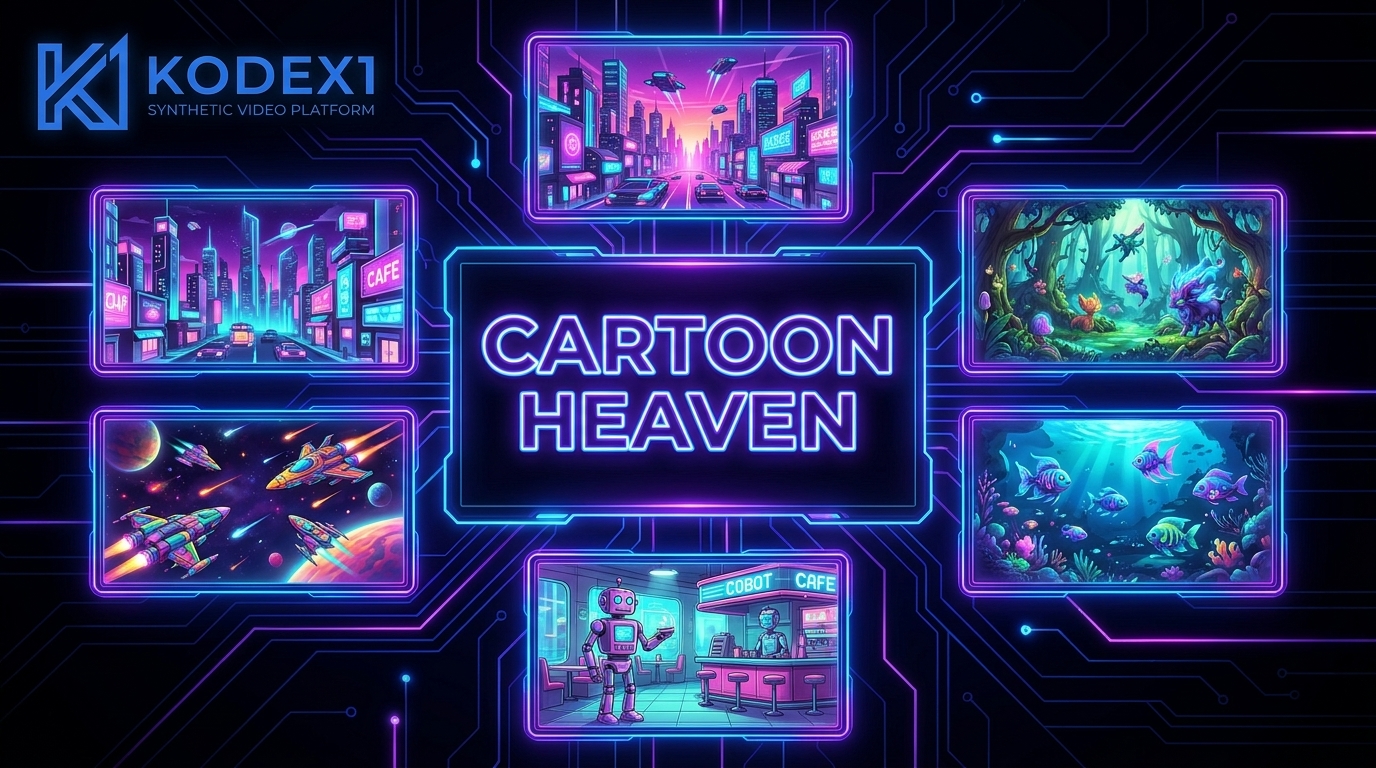
    Round 5 used the theme: Cartoon Heaven.

    The prompt tested something specific: cartoon-style aesthetics, expressive motion, vivid color, and the kind of fluid character energy that separates a genuinely animated feel from a model that just applies a cartoon filter to realism. It's one of the harder prompts in AI video because cartoon motion has rules — exaggeration, bounce, timing — that most video models weren't trained to prioritize.

    Here's what each model produced.


    LTX-2.3

    LTX-2.3 is a lightweight open-weight model from Lightricks. On photorealistic tasks it often punches above its weight class. On Cartoon Heaven, the story is different.

    The output reads more like a stylized realistic scene than a true cartoon. Color saturation is high, which gives the impression of animation, but the motion physics stay grounded — characters and objects move the way real-world subjects move, not the way a cartoon would. There's no exaggeration, no snap on motion cuts, and no sense of the bouncy, anticipatory movement that defines the genre.

    For low-resource generation or rapid iteration on realistic prompts, LTX-2.3 remains a strong option. For cartoon-specific work, this round exposed its ceiling.

    Cartoon style fidelity: Low
    Motion quality: Moderate
    Best use case: Realistic stylized video, not animation


    PixVerse C1

    PixVerse C1 pushed further into stylized territory than LTX-2.3. The color palette is bolder, and there are moments where the character movement has a more fluid, animated quality. It reads closer to the cartoon brief.

    The issue is consistency. Within the same clip, the style shifts — some frames feel genuinely animated, others drift toward the uncanny middle ground between cartoon and realism that neither satisfies. This inconsistency is a known challenge for PixVerse on style-heavy prompts.

    If the model had maintained its strongest frames throughout, it would have been a legitimate challenger in this round. As a complete output, the tonal variation cost it.

    Cartoon style fidelity: Moderate
    Motion quality: Moderate
    Best use case: Stylized content where some variation is acceptable


    Hailuo 2

    Hailuo 2 (from MiniMax) is best known for its cinematic motion and strong camera language on realistic prompts. This round showed that capability clearly — the camera work is confident and the scene composition is strong — but the cartoon aesthetic doesn't land.

    The output looks like a cinematic short film given a mild cartoon grade in post. The motion, the lighting logic, the character behavior: all realistic. Hailuo 2 generates beautiful video. It just doesn't generate cartoons.

    This is a model-type mismatch rather than a failure of execution. If you need cinematic AI video with strong motion and professional framing, Hailuo 2 belongs in your toolkit. For cartoon-style animation specifically, look elsewhere.

    Cartoon style fidelity: Low
    Motion quality: High
    Best use case: Cinematic realistic video, brand content, narrative sequences


    Kling 1.6 Pro

    Kling 1.6 Pro from Kuaishou is one of the most widely used AI video models in production workflows as of 2026. Its strength is reliable, high-quality output across a wide range of prompts — it rarely fails badly, and it frequently produces clips that hold up to scrutiny.

    On Cartoon Heaven, Kling 1.6 Pro delivered a competent cartoon-adjacent output. The style is cleaner than PixVerse's inconsistent take, the colors are vivid, and the motion has more character energy than the realism-skewed models. It reads as animated. It just doesn't read as special.

    Where Kling 1.6 Pro lost ground in this round is expressiveness. The motion is smooth and technically correct but lacks the exaggerated, elastic quality of great cartoon animation. It's the difference between a model that understands the aesthetic and one that truly commits to the physics of the genre.

    Cartoon style fidelity: Good
    Motion quality: High
    Best use case: Reliable general-purpose video; competitive on cartoon prompts but not dominant


    Pika 2.2

    Pika 2.2 is one of the more creator-friendly models on this list, known for its accessibility and strong performance on stylized prompts. For Cartoon Heaven, it produced an output with genuine personality — characters that feel lively, color choices that commit to the cartoon world, and a sense of fun that some of the more technically-focused models missed entirely.

    It isn't the most technically refined output in this round. Motion fidelity under scrutiny shows some of the characteristic Pika artifacts on complex movement. But as a complete viewing experience, the Pika 2.2 output has energy that several higher-ranked technical performers don't.

    Pika 2.2 is worth serious consideration for cartoon and stylized content where creative feel matters more than technical perfection. For this specific prompt and this specific community vote, it placed mid-pack — respectable, not decisive.

    Cartoon style fidelity: Good
    Motion quality: Moderate
    Best use case: Stylized, expressive content; creator-friendly workflows


    Seedance 2.0

    Seedance 2.0 is ByteDance's multimodal AI video model, announced in February 2026. It generates up to 15 seconds of synchronized audio-video output from text and image inputs using a unified architecture that handles composition, motion, camera planning, and audio in a single generation pass. Independent benchmarks consistently place it near the top of AI video leaderboards, ranking #1 for image-to-video with audio on Artificial Analysis.

    On Cartoon Heaven, Seedance 2.0 did something the other five models didn't: it understood the brief at a deeper level.

    The output commits fully to the cartoon world — not just visually, but physically. Motion has the right kind of exaggeration. Characters move with snap and anticipation. Color choices feel designed for the scene rather than generated. The spatial logic of the world holds together in a way that suggests the model understood "cartoon" as a set of rules, not just a visual style.

    The audio-video sync, a known Seedance 2.0 strength, also contributed. Sound that lands in rhythm with character movement adds a layer of perceived quality that's hard to achieve with post-processed audio. In a cartoon context, that sync matters enormously.

    This is not a model that happens to do cartoons. On the evidence of this round, it's a model that excels at animation-style generation specifically.

    Cartoon style fidelity: Excellent
    Motion quality: Excellent
    Best use case: Cartoon animation, stylized video, any prompt where expressive motion and audio sync matter


    The Vote Results

    Model Vote Share
    Seedance 2.0 75%
    Kling 1.6 Pro —
    Pika 2.2 —
    PixVerse C1 —
    Hailuo 2 —
    LTX-2.3 —

    Seedance 2.0 took 75% of all community votes — a result that isn't close by any measure. In a six-way competition where votes are genuinely split across strong models, a three-quarter majority is a decisive statement from the community.

    This was Seedance 2.0's first win in The Coliseum, ending a run of three consecutive victories by Veo 3.1 Fast. The margin suggests it wasn't a close call.


    What the Numbers Tell Us

    A few things stand out from this round.

    Cartoon style is a genuine differentiator. This prompt separated the field more decisively than any photorealistic prompt would. Models that dominate on cinematic, realistic prompts — Hailuo 2 is the clearest example — placed near the bottom not because of poor quality, but because the prompt was outside their design center. Choosing the right model for the right task matters more than choosing the "best" model overall.

    Seedance 2.0's audio-video sync is a real advantage on animation. Cartoon content is uniquely sensitive to sound timing. The synchronized audio output Seedance 2.0 produces natively creates a quality perception gap that's difficult to close in post-production.

    75% is unusual. In most Coliseum rounds, votes distribute more evenly across the top two or three models. A 75% result in a six-model field suggests near-universal agreement — not a divided community leaning slightly one way, but a clear winner that the majority of voters agreed on immediately.

    Model selection is prompt-dependent. If you're choosing an AI video model based on a single benchmark or general "best of" list, this round is a reminder that context changes the answer. Kling 1.6 Pro is one of the most capable models in production use today. On this prompt, Seedance 2.0 wasn't close.


    Watch Every Round at Kodex1

    The Coliseum at Kodex1 runs continuous head-to-head battles across the top AI video models. Every round uses the same prompt across all models — no curation, no cherry-picking — and real community votes decide the winner.

    Watch the current Coliseum battle at Kodex1 →

    Past rounds are archived. You can watch every model's output side by side, see the vote history, and follow individual AI Directors building their catalog on the platform. Kodex1 is free — no subscription, no paywall.