Description
The best AI video generators in 2026 are not one tool. This guide ranks Kling, Sora, Veo, Seedance, Runway, and Luma for filmmakers, then shows how to pick a stack and ship a short that holds together.
Best AI Video Generators in 2026: What Directors Actually Use
The “best AI video generator” question is a trap. In 2026 you do not pick one model and retire. You pick a stack. One engine owns physics. Another owns camera grammar. A third holds a face across five cuts. The directors who look expensive treat generators like lenses, not like a studio in a box.
This roundup is for people who want cinematic shorts, not talking-head slideshows. If you hunt for the best AI video generators in 2026, start with job, not brand.
TLDR
- There is no single winner. Match the model to the shot.
- Curious Refuge’s 2026 review scored Seedance 2.0 highest on output (8.4/10) and called Kling 3.0 the best overall experience (8.1/10).
- Zapier treats Google Veo 3.1 as the all-arounder for prompt and image-reference adherence.
- Kling still wins many action and fabric shots. Sora still wins hero cinematic sequences. Runway still wins when you need motion brushes and paced camera.
- After you generate, you still edit, grade, and mix. Then you need a place the work lives.
What is the best AI video generator in 2026?
The honest answer: the one that fails least on the shot you need today.
Curious Refuge tested current models on prompt adherence, temporal consistency, visual fidelity, motion, and cinematic realism. Their top ranks:
- Seedance 2.0, 8.4/10. Strong physics, multi-shot scenes, native lip sync and audio. Backgrounds can look plasticky.
- Kling 3.0, 8.1/10. Cinematic motion and lens behavior. Pricey. Overloaded prompts can drop adherence to protect consistency.
- Luma Ray 3.2, 7.7/10. Skin, emotion, and character hold. Occasional artifacts.
- Hailuo 2.3 (MiniMax), 7.5/10. Subject reference for character lock. Anatomy and logic still break on busy motion.
- Veo 3.1, 7.2/10. Clean interface, image “ingredients.” Motion can feel floaty. Text and complex emotion are weak.
- Runway 4.5, 6.2/10 in that test. Strong character lock, weak object permanence and cost-to-quality.
Zapier’s 2026 roundup still puts Veo 3.1 first as an all-arounder. Reddit filmmakers in 2026 split the same way: Sora 2 for hero shots, Kling for affordable cinematic motion, aggregators like OpenArt when you want to A/B models in one tab.
If you make films, ignore “overall best.” Assign roles.
Which AI video generator is best for filmmakers?
Filmmakers need four things the marketing pages skip:
- Character lock across coverage, not one pretty clip
- Physics that sell weight: cloth, hair, impact, footsteps
- Camera grammar you can call: push-in, whip pan, locked tripod, Dutch
- Editability: clean in/out points so you cut on action instead of dissolving between glitches
Kling: action, fabric, faces in motion
Kling remains the workhorse for physical interaction. If a jacket has to swing and a face has to survive a turn, start here. Keep wardrobe high-contrast so the model has an anchor. When you dump a paragraph of camera notes into one prompt, Kling will protect motion and dump your extras. Split the shot.
Sora: hero cinematic sequences
Sora (including Sora 2 in 2026 tests) still owns the “this looks like a trailer” shot: scale, atmosphere, the wide that makes people stop scrolling. Use it for establishers and climaxes. Do not build an entire short inside one Sora session unless you like fighting continuity.
Veo 3.1: reference-led realism
Veo 3.1 is the tool you open when you have stills you trust. Feed ingredients. Stay close to the board. Use Fast for boards, Quality for finals. Watch for floaty gravity and mushy emotional close-ups.
Seedance 2.0: multi-shot and native audio
If you storyboard in sequences instead of isolated 5-second clips, Seedance 2.0 is the 2026 surprise. Multi-shot generation plus native lip sync changes the assembly. Still grade it. Still replace the score if the native audio is generic.
Runway: control, not raw beauty
Runway’s camera tools still matter when you refuse random pans. Motion brushes, directional control, paced moves. In Curious Refuge’s scoring it lagged on realism. Directors who already think in coverage still keep a Runway seat for the shots that must obey a move.
Luma Ray: faces and skin
Ray 3.2 is the close-up specialist. Emotions and skin texture hold better than most. Pair it with Kling for the wide-to-medium, then cut to Luma for the eyes.
Is there a free AI video generator worth using in 2026?
Free tiers exist so you can fail cheap. They are not a production pipeline.
Curious Refuge notes most of the tools above give at least one free generation. That is enough to learn prompt shape and to see whether a model respects your character sheet. It is not enough to finish a 90-second short with consistent coverage.
If budget is tight:
- Board on a cheaper/faster model (Veo Fast, Hailuo, open models like Wan)
- Spend paid credits only on hero shots and character lock
- Do sound and grade in Resolve. That is still where films become films.
Open models (Wan 2.7, LTX) are real options if you run local or cheap inference. They trail the closed leaders on physics and consistency. Fine if you accept cleanup.
Can you use more than one AI video generator in one film?
Yes. You should.
Winning shorts in 2026 almost never come from one tab. A typical director stack:
| Job | Tool |
|---|---|
| Character stills / turnaround | Midjourney, Flux, or your locked sheet |
| Action and fabric | Kling |
| Hero wide / atmosphere | Sora or Veo |
| Controlled camera | Runway |
| Emotional CU | Luma Ray |
| Multi-shot + temp audio | Seedance |
| Conform, grade, mix | DaVinci Resolve |
Mute native generator audio unless you designed for it. Layer Foley, room tone, and a score that hits cuts. Color grade so Kling and Veo look like the same world.
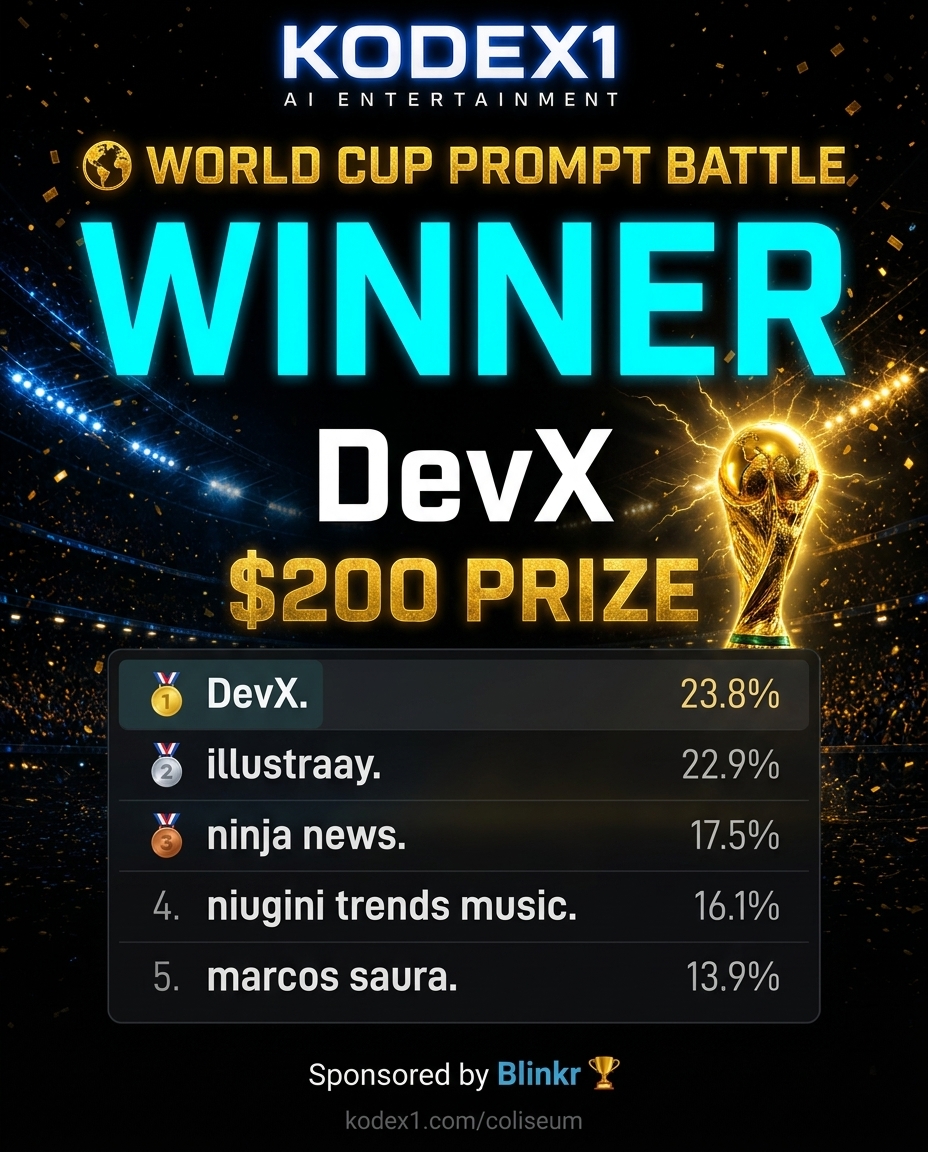
If you want pressure on that stack, enter a timed round in the Kodex1 Coliseum. A 48-hour prompt plus public votes will tell you whether your cuts hold or your generator cocktail is just a mood board.
How do you choose among the best AI video generators in 2026?
Ask four questions before you buy a plan:
- What is the shot? Physics, face, wide, or camera move.
- Do you have references? Veo and Hailuo reward stills. Kling rewards a locked wardrobe.
- What is the credit cost of a failed take? Expensive models punish exploration. Board cheap, finish expensive.
- Where does the film live after export? Generators do not give you an audience, a portfolio, or a prize.
Kodex1 does not generate your pixels. You already have Kling, Sora, Runway, Veo. What you lack is a permanent studio and an arena. Build a director page so the work does not die in Discord. If you sell or take commissions, the Earn path is the honest next step after the export.
A practical 2026 workflow
- Write a short that a model can survive: one or two characters, high-concept space, no crowd brawls.
- Lock a character bible (6-10 stills, same light, same clothes).
- Generate coverage, not beauty shots: wide, medium, close, cutaway.
- Cut on action before the glitch. Hard cuts, not dissolves.
- Mix like a film. Grade like one world.
- Publish where directors and viewers actually look.
Ninety seconds beats five minutes of generative fatigue. Festival jurors and Coliseum voters both punish rubber limbs and drifting faces.
Conclusion
The best AI video generators in 2026 are a kit: Seedance and Kling for motion and sequence, Sora and Veo for scale and reference, Runway for camera you can aim, Luma for the close-up that has to feel human. Rankings from Curious Refuge and Zapier help you spend. They do not finish the film.
Generate. Direct the cut. Then put the short where it can compete.
Start on kodex1.com. Watch. Vote. Drop your own work in the Coliseum. 3 days free. No card. Then $5/mo. Cancel anytime.